Calisthenics challenges with rules you can repeat
Pick a movement you can control, choose reps or hold time, and keep enough detail to repeat the test under the same conditions.
These calisthenics challenges are single-session bodyweight tests. Choose a movement, follow its written rule and record one result in repetitions or seconds. The public rules can help you run a manual test today. OpenContest is prelaunch, with a waitlist for app updates.
Choose by equipment and scoring unit
| Challenge | Equipment and setup | Result |
|---|---|---|
| Strict pull ups | Secure bar with room for the full hang and chin clearance | Accepted reps in one set |
| Push ups | Clear floor space, hands flat on the floor | Accepted reps in one set |
| Forearm plank | Clear floor space, mat if wanted | Accepted hold time |
| Freestanding handstand | Clear floor space and a controlled entry and exit | Accepted hold time |
Start with a movement you already know how to perform. A filmed test should let another person see the movement and the moment it ends. Read the full rule for the chosen test before setting up.
Pull ups need a visible start and finish on every rep
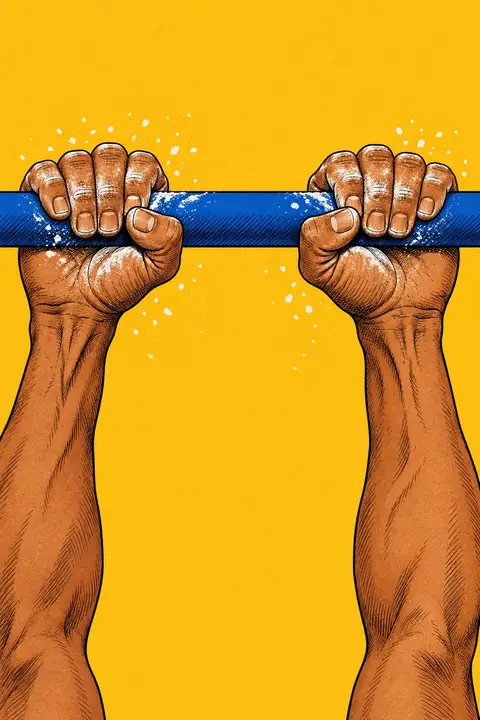
For the strict-pull-up challenge, use an overhand grip and start each repetition with straight arms in the hang. Raise the chin clearly above the bar and return to straight arms. Keep the body free of a kick or swing.
Film side-on with the bar, hands, chin and feet visible. Leave room above the bar so the top position stays in frame. The published rule permits pauses in the hang while you maintain your grip, and the set ends when you release the bar or your feet touch the floor or a box.
If your starting point is zero unassisted repetitions, keep that result and work through the first-pull-up guide. For published comparisons and their source populations, see how many pull ups should you be able to do.
Push ups need consistent depth and lockout
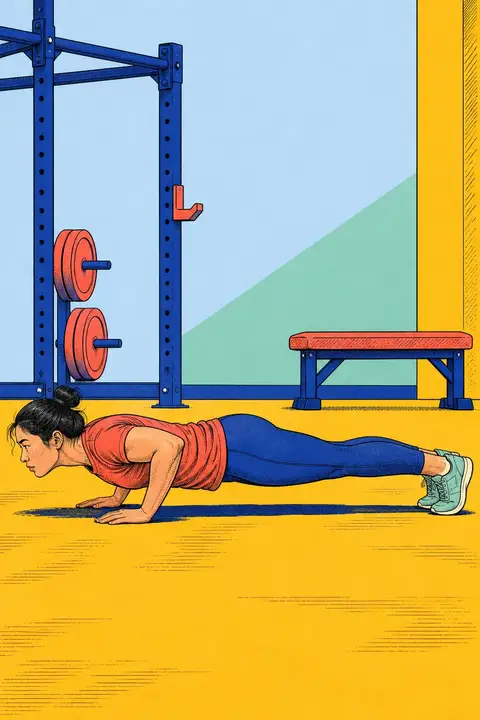
The push-up challenge uses hands flat on the floor, straight arms at the top and upper arms at least parallel to the floor at the bottom. Keep the shoulders, hips and heels in a straight line.
A side-on camera near floor level lets a checker inspect depth and body position together. Resting at the top is allowed under the published rule while only hands and feet touch the floor. The set ends when the knees touch down. Count the last complete repetition that satisfies the rule.
Time a plank until its position ends
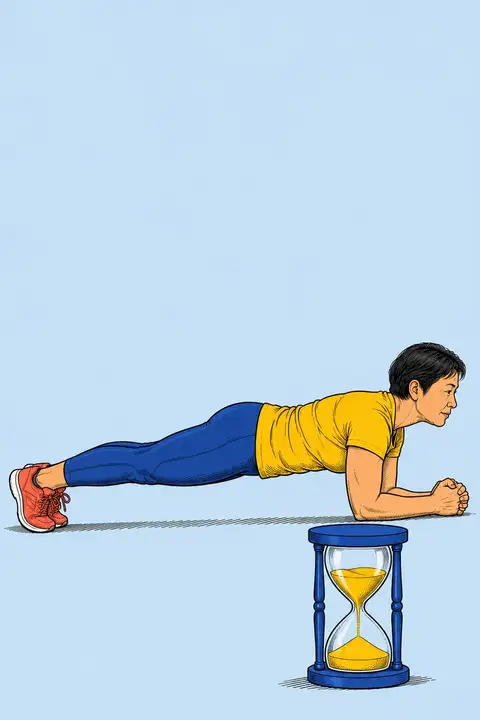
The plank challenge uses forearms on the floor, elbows under the shoulders and a straight line through the hips to the heels. Feet can be together or up to hip width apart. A straight-arm variation needs a separate record.
Start the timer when the required position is established. Stop at knee contact or when the hips sag or rise out of line. Put the camera side-on so the checker can see the shoulders, hips, knees and feet through the hold. Keep the start and end visible in the recording.
Choose a handstand test only when you can exit safely
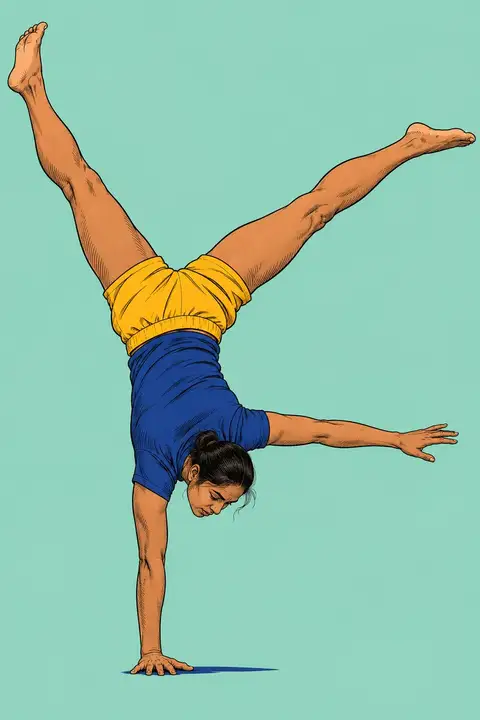
The handstand challenge is a freestanding floor hold. Its clock starts when both feet leave the floor and ends when a foot touches down or a supporting hand moves to a new spot. The full rule explains repeated kick-ups and which hold is counted.
Keep the hands, feet and surrounding floor in the frame. Give yourself clear space to come down. Practise a controlled entry and exit with qualified help before attempting a timed hold. Wall-assisted practice belongs in its own record, with the support described.
Keep scaled variations in separate records
A change in assistance, grip, support height or equipment changes the task. Write it beside the result. If you do push ups with your hands on a bench, record the bench height and use that setup again when comparing your progress.
For a group, let people choose a variation they can control and keep each variation’s results separate. You can share a participation goal while each person keeps their own performance record. Our fitness challenges with friends page covers deadlines, ties and that participation format.
Stop if exercise causes pain. If you are unsure about form, ask a physical therapist or athletic trainer for help. This follows Cleveland Clinic’s advice on starting bodyweight exercise. Cleveland Clinic’s calisthenics guidance
Save enough detail for the next attempt
Keep the test name, written rule, date, accepted result, variation and equipment details together. Add a checker or a video link if you use one. Agree on who can view the recording before sharing it.
The filming guide covers framing, light and uninterrupted recordings. Check your short setup clip before the attempt, then retain the same conditions when you test again.
Contests to start with
Questions
Which calisthenics challenge needs the least equipment?
The published push-up and forearm-plank tests use clear floor space, plus a phone if you want to record the attempt. Pull ups need a secure bar. A handstand needs suitable space and an established ability to enter and leave the position safely.
Can beginners use a scaled movement?
You can keep a separate personal record for a movement you can control, such as push ups with your hands on a stable raised surface. Record the variation and support height. Each variation needs its own comparison.
How do we compare repetitions with hold times?
Keep separate results for each test. Ten push ups and a 30-second plank measure different tasks. Any combined points system needs its own published formula and should be described as a group-created scoring choice.
Can I enter these through the OpenContest app now?
OpenContest is prelaunch. You can read the published rules and keep a manual record today. Join the waitlist to hear when the app opens.