Pull-ups vs chin-ups
Short answer
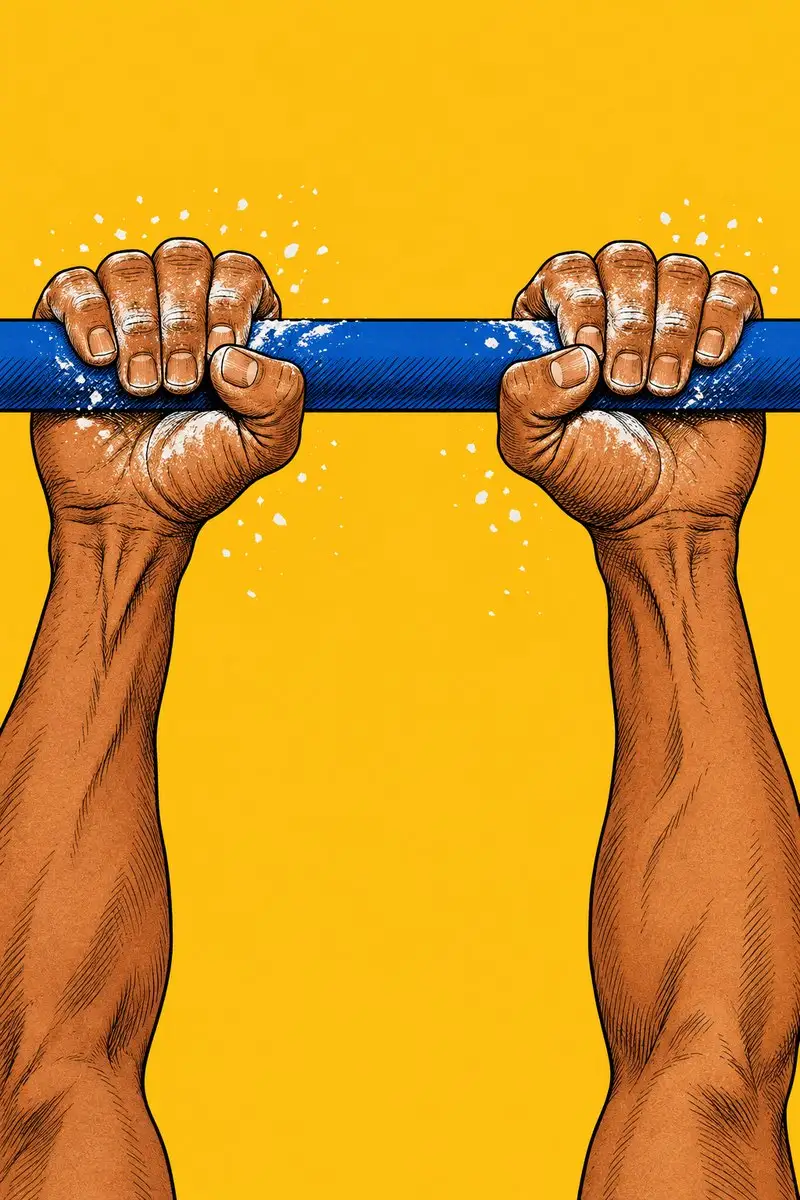
Pull-ups use an overhand grip with palms facing away. Chin-ups use an underhand grip with palms facing you. Both involve back muscles and elbow flexors. Choose a variation for your goal, then keep the grip, assistance and counting rule attached to your result.
The grip names
| Exercise | Grip term | Palm direction |
|---|---|---|
| Pull-up | Pronated or overhand | Away from you |
| Chin-up | Supinated or underhand | Toward you |
Both movements raise the body toward an overhead bar and involve muscles of the back and elbow flexors, including the biceps. NASM’s grip comparison · ACE’s chin-up technique and muscles
Research papers sometimes group several grips under the name pull-up variations. An underhand chin-up can appear as a supinated-grip pull-up. Check the hand position when reading a comparison. Terminology in Dickie and colleagues’ study
Choose for the task you want to do
For an attempt under OpenContest’s strict-pull-up rule, use the overhand grip. The published rule allows any grip width, starts each repetition with straight arms and requires the chin to rise clearly above the bar. Read the full checklist before testing a set. Strict-pull-up rules
For practice, NASM describes chin-ups as easier for many clients. That coaching observation can help you choose a starting variation, alongside your ability to control the movement. If you need assistance, our first-pull-up guide covers staged practice with hangs, controlled lowering and assisted repetitions. NASM’s coaching guidance
Compare a chin-up set with your previous chin-up sets, and an overhand set with your previous overhand sets. Keep the same starting position, finishing height and assistance when tracking progress. A change in those conditions belongs in the record.
What the muscle studies measured
Youdas and colleagues compared pull-ups, chin-ups and a twisting-handle variation in 25 volunteers, comprising 21 men and four women. They recorded surface electromyography, or EMG, during the exercises. Chin-ups produced higher EMG activity in the biceps brachii of the upper arm and the pectoralis major in the chest. Pull-ups produced higher activity in the lower trapezius, a muscle of the back. Youdas and colleagues’ 2010 abstract
Dickie and colleagues studied 19 strength-trained men using supinated, pronated, neutral and rope grips. Their abstract describes muscle activation across complete repetitions as broadly similar despite the different hand orientations. It also reports specific differences, including higher middle trapezius activity for the pronated grip compared with the neutral grip. Dickie and colleagues’ 2017 abstract
Surface EMG collects electrical signals through sensors at the skin. Recording conditions and normalization affect how those signals can be interpreted. A methods review by Vigotsky and colleagues examines the limits of drawing strength and muscle-growth predictions from an exercise’s EMG amplitude. A claim that one grip produces more growth needs training evidence that measures changes over time. Review of surface-EMG interpretation
The two comparison studies above provide a small, short-term view of muscle activity. Use their findings with their samples and methods attached. A choice for a whole training program also involves the movements you can perform, your goals and the way the work progresses.
Keep a result with a clear rule
OpenContest is prelaunch. Its published rules are available for a manual scorecard today, and the waitlist is open for the planned app. To record a strict-pull-up set, use the overhand rule and keep chin-ups in a separate record. Published pull-up checklist
- Write down the exercise, grip width and any assistance or added weight before the attempt.
- Film from the side with the bar and your whole body visible. Start recording in the hang and keep the full set in one take.
- Review each repetition for the straight-arm start, clear chin-over-bar height and absence of swinging or kicking. Count the repetitions that meet the chosen rule.
- Save the date, accepted count and recording. Note any change in grip or setup before comparing the next set.
Under OpenContest’s rule, you may pause in the hang while keeping hold of the bar. Repetitions after your feet touch the floor or a box are excluded. The filming guide explains how to keep the relevant positions visible for another person to review. Full counting rule
When you want context for an overhand maximum set, the pull-up benchmark guide explains the populations and methods behind published counts. Keep the test definition beside the figure you use.
Questions
What is the difference between pull-ups and chin-ups?
The conventional naming difference is the grip. Pull-ups use a pronated, overhand grip with palms facing away. Chin-ups use a supinated, underhand grip with palms facing you. Record grip width and assistance alongside the exercise name.
Are chin-ups easier than pull-ups?
NASM describes chin-ups as easier for many clients. Treat that as a coaching generalization and choose a controlled variation you can practise. Keep your counts specific to the grip, assistance and movement rule you used.
Which exercise builds more muscle?
The two small comparison experiments discussed here measured muscle activity during exercise. A growth comparison needs a training study that measures changes over time. Choose your variation around your goal and keep the conditions of your practice visible.
Do chin-ups count in the OpenContest pull-up rule?
The published strict-pull-up rule requires palms facing away throughout the set. Keep chin-ups as a separate training record. OpenContest is prelaunch, with published rules and a waitlist for the planned app.